conversations
A few reflections on good conversations
What do we mean by good conversation?
It’s analogous to dancing. It flows. It leaves both parties changed. It involves leading and following - vice versa. You don’t know where you might end up, where the music will take you.
Bad conversation - well we’ve all been in it, either on the receiving end or the speaking end. It feels forced, uninspiring or drawn out. But it’s always a dynamic, and you are one part of it.
Three levels of conversation
First, recognise that there are three levels of conversation. This is from ‘authentic relating’ :
- Informational
- Personal
- Relational
Informational : Exchanging bits of information (what’s your name, what do you do, how was your weekend). What we think of small talk. This is safe and necessary, and usually the starting point of conversations; the doorway.
Personal : how do you feel about that information? ‘How do you feel about your job, how did you feel about this event’. This involves revealing values, preferences, emotional states, meaning. You can decide to take conversations into this space from the informational, simply by asking people how they feel about ‘X’.
Relational : noticing how you both feel about the conversation, or describing your present moment experience. It’s inviting a person into the present moment experience occurring in our mind; without masking or filtering. Dropping any barriers. This is very much in tune with ‘authentic relating’ or ’non violent communication’. The relational level is where you ‘feel seen’, ‘known’, ‘understood’.
You can go up and down these levels of conversation.
The context and purpose of the conversation matters - if you’re in a business meeting, it is not necessarily the best thing to spend time in the relational level letting down your barriers, but instead spending more time in information and a little bit in personal realms.
But if you’re with a friend, or a partner, then moving into that personal-relational level is where you explore meaning, feelings and reveal your ‘mind’.
Doorknobs
This idea is stolen from this fantastic essay : ‘Good conversations have lots of doorknobs’.
The basic idea is that you drop in bits of information (in that first informational realm), that invite your conversation partner, if they are receptive, to open those doors and take the conversation into the ‘personal or relational’ realms.
If you think of conversations as ‘giving and taking’ (leading and following if we use dancing), then good conversations have a balance between giving out information/feeling (creating doorknobs) and exploring information/feeling (opening doors).
Giving means creating ‘big graspable doorknobs’ that the other person can seize upon. Taking means being willing to open those doors that your partner may have offered.
Good conversations have a landscape abundant with these doorknobs - ‘conversional affordances’.
A few biases that Mastrionni mentions is :
- People rarely want to hear about exciting stuff we did without them - they would rather hear about a time we were together, even if mundane.
- We ‘overestimate the awkwardness of deep talk’, so we tend to stay in the ‘shallows’ - superficial conversation. This is like spending all your time in the informational realm, rather than being willing to take it into the personal/relational levels. This is often due to a ‘fear of being seen or judged’.
- Egocentricism : when the conversation is all about ‘I’, we don’t create a giving/taking dynamic, we don’t allow our partner to create any doorknobs. It’s like a forceful lead dragging their partner around a dance floor. (“Enough of me talking about stuff I like. Time for you to talk about stuff I like!”). Mastrionni says that if you find yourself in conversation with someone like this, the best you can do is give them all sorts of doorknobs “ornate french door handles, commercial grade pushbars, ADA compliant auto-open buttons, and listen closely for any that they might give us in return”.
People tend to fall into the camp of ‘givers’ or ’takers’.
Mastrionni says that a giver meeting a giver is fine (they both offer a series of doorknobs, statements, invitations and they conversation can proceed). Takers and takers are fine as they both just make series of statements - this does tend to lead to neutral and forgettable conversations, no exploration into the personal or relational realms.
But when a giver and a taker meet - the giver gives, the taker takes, and this can lead to bad conversations. An example :
A: I went to visit my sister this weekend (giving - a doorknob appears)
Takers I think can be divided into ‘closed’ and ‘overtalking’. Closed - they refuse to actual open the door. Overtalkative - they use openings to pivot back to themselves
B: Oh cool (no opening or curiosity)
B: Oh yeah I have a sister too — she lives in Berlin and last year we did this cycling trip and I nearly died on a hill climb and anyway Berlin coffee is so overrated, like everyone thinks it’s cool but actually— (Goes on for 4 minutes.)
A : … (resentful ‘why won’t he ask me a single question!’ )
People tend to fall into camps of givers or takers. But the meta is realising that you have to flit between those two roles. It’s a dynamic.
What does it mean to get better at conversations?
Is it about you being authentic? About being able to communicate your mind to another? About manipulation or rhetoric?
I don’t think there is a right or a wrong here at least objectively - hence it’s sometimes called the ‘art of conversation’. It’s very much context dependent.
I would list a few goals of conversation
- Exchange information / memes / ideas
- Understand world views
- Mutually explore feelings or ideas
- Persuade
Whatever your goal (or non-goal) getting better at conversations requires going back and actively reflecting on what went well, what went wrong, and how you can improve. Like any ‘deliberate practice’.
Articles I’ve enjoyed about conversation
role of school is motivation
I read this fantastic article on Astral Codex Ten. The primary thesis being that the role of school was motivating kids to learn - despite it not actually being the most effective way to learn. But that motivation structure is needed to actually put in the work to learn - which is hard to do with the alternative forms of education that have been tried.
The core design of our schools – age-graded classrooms where all students are expected to learn more or less the same curriculum – are the worst form of motivation we could invent…except for all the others. While school is not particularly effective at motivating students, every other approach we’ve tried manages to be worse
A jumble of my thoughts and takeaways on the topic.
No-structure, low structure and high structure
I liked the division of students into : no-structure, low structure and high structure kids.
No-structure kids (5%) : learn effectively with minimal or no external guidance of accountability. They have high intrinsic motivation, can be self directed (find resources, keep themselves accountable). They don’t need teachers and often learn despite school. They are therefore bored in traditional classrooms because they already know the material or learn it faster alone.
Low-structure kids (75%) : students who need the basic motivational structure of school to get through learning the topics. They need the assignments, routine, ‘social pressure of everyone doing the same thing’. The quality of the teachers matters less, and it’s more that a structured map is provided. They may not learn on their own but they’ll learn whatever the class learns and keep up with peers without struggling too much.
High structure kids : students who struggle despite the standard school structure and need explicit support. They have low intrinsic motivation for academic work, avoid schoolwork, need constant check-in’s reminders, scaffolding. The quality of the teaching and support matters a lot and they will fall through the cracks with mediocre instruction.
He gives the example of someone studying computer science. The no structure kid is always programming on their own and learning from stack overflow outside of class, and occasionally showing up to class to ensure he gets a degree.
The low structure learner shows up to class, with the coursework and lectures being enough motivation to learn, but they aren’t learning much outside of that on their own. The high structure kid has a tough time, and they are using all the support - the extra office hours, the tutoring etc.
I would also add that people move in between these categories depending on what one is studying. For reading and programming, I was a no-structure kid, often just learning whatever I needed to on my own - the intrinsic motivation was high.
But for mathematics (and I think many other subjects), I was a low-structure kid - I needed the classroom structure, the regular assignments and accountability to keep going. I recently tried Math academy as a way to self-learn mathematics, and it sadly failed. I got through about 1 month before I quit.
Motivation structures
Motivation is a hard problem. It’s no wonder why MOOC’s have a ridiculously high attrition rate - they just don’t work.
Learning things is hard. There was a sister post to this called ‘Alpha school : a review’. In it he touches on deliberate practice looking at elite students, asking why did some students practice more than others? An initial conjecture was that they enjoyed it - but that was false - “The future elite soloists of the music world all hated practicing”.
So if the best students all hated practicing, but deliberate practice was how one improved, why did some students practice more than others?
Because they had stronger more developed motivational structures that kept them coming back to practice and put in the painful hours. He talks about motivation evolving through three stages
- Parental and authority approval - initially kids practice because they get praise from parents when they do and are reprimanded when they don’t
- Peer approval - then young musician start to care less about parents and more about relative status games amongst peers. You play status games with your peers to motivate one to improve.
- Self actualisation - the best musicians eventually internalise their desire to be great - they see themselves as a musician and do the hard work of practicing because ’that’s what a great musician does’. i.e. You tie your identity to it.
School does 1 and 2 well, and allows for ‘3’ to potentially occur.
School provides basic scaffolding, accountability, motivational structures so that most students (who are low structure) leave school with a basic understanding of maths. The kids however who were no structure for maths, would often sit at the back of the class and doodle, having already taught themselves the lesson.
An argument is that those kids could be moving faster on their own, without school. I agree. But I also think that the kid is not like this with all the subjects. For example : someone might be brilliant at maths but not care for history or struggle with English.
Having school means that they keep on plodding along on those ’low structure’ subjects, that they wouldn’t be motivated to go into otherwise.
Any argument is then : why have them learn that?
Another role of school I think is to provide some form of ‘common knowledge’. To impart the idea, that there is depth to this subject, that other people know. i.e. that there can be experts in this field, and we can trust some of what the experts say.
If we didn’t have that - we wouldn’t know what we don’t know - we lose a common knowledge. As one of the commenters says in the post, if we didn’t have that kind of common knowledge, society would not be stable.
You just know enough to know that you don’t know, and that there is real depth to the subject.
If you become too specialised, you may leave a brilliant maths student, but have no idea what Democracy means, or that slavery was a thing. I’d argue that leaves you unable to thrive in society.
Hold on : what is motivation?
A criticism in one of the comments is that the author doesn’t really define motivation. He also has this implicit premise that having high motivation means that you automatically learn ‘better’.
I know people who have ‘high motivation’, yet consistently fail to accomplish their goals, and others who have a bit of motivation, but keep on showing up regularly and succeed.
So what do we mean by motivation?
I would argue that instead of using the word motivation, the author might mean that schools and universities provide ‘structure’ such that we keep on showing up to do the work.
Either because (i) you’ve paid for it (university) (ii) it’s societally mandated (school) (iii) you’re identity is in it, you like collecting imaginary points in the form of exams and degrees
It allows for the formation of habit loops.
If we’re lucky, we then move down that motivational structure (authority approval -> peer approval -> intrinsic motivation/self actualisation).
Do we choose what we are intrinsically motivated to do?
Is intrinsic motivation baked in? Or is it a trainable (meta) skill?
Scott Alexander in another post ‘Lottery of Fascinations’, argues that we don’t choose what we become intrinsically motivated in. I think I largely agree.
The best you can do as a parent is to expose your children widely to various fields, start inevitably with external incentives (that school provides - social status, authority approval), and remove barriers when they show interest.
Excessive external pressure may actually drown out the arising of natural intrinsic motivation.
It’s a delicate balance - too much pressure crushes emerging interest, too little means no exposure at all. The goal is creating conditions where intrinsic motivation might take root.
Learning as an adult
I was very much a low structure kid, as I think most people are, for most subjects. It’s hard to create motivational structures. It’s also why learning things as an adult is quite hard! It requires you to keep coming back, putting in the hours and grinding with deliberate practice - and that is difficult to do without accountability.
Obviously you can do it - I’ve done it, I know many people who self teach themselves as an adult. But I also have so many aspirational projects sitting in the graveyard right now - attempts to self study Mandarin and mathematics. We know this intuitively. Technically all the information we need to self study anything is online - it’s just a problem of motivation (or more accurately creating habit loops and motivational structures such that one keeps on showing up!). Online programs don’t really work in this regard:
The core problem with these online programs is having every student work independently, without any connection to what the students around them are learning. That just doesn’t motivate many students
So in the essay, the author says that school is the best method we’ve got (despite it having multiple problems)
In the absence of one-on-one tutoring for every student, conformity is the best tool we have to create the motivation necessary for learning.
Suppose you want to learn a skill as an adult. The truth is that the early stages of any skill development are disproportionately hard, and it can help to have external accountability and support in this time.
The idea is that you can move down those motivational levels with external accountability, such that intrinsic motivation arises, and you develop strong enough habits such that you keep on showing up to do the work.
After having self-learned a few topics, I think if you want to seriously learn a topic as an adult, the best you can do is
- Use strong external structures (paid courses, coaches, study groups, or just sign up to a degree…)
- Develop sustainable habits such that you show up
- Hope that intrinsic motivation emerges (if you are lucky) - and that a virtuous feedback cycle develops
So to have a strong chance of success for learning something on your own
- Pay for the thing
- Do it with a peer group/accountability structure
- Have a coach or mentor (more external accountability)
- Do it daily or at least regularly
Conclusion : school aint going nowhere
The author ends with the prediction that the schooling structure is largely going to stay the same, despite all the advances in AI etc. Because it’s the best tool we have to motivate the largest number of students, despite it not being particularly great at ’educating’.
I came into the essay, disagreeing with the author. And I left, with my opinions and view on the topic altered. This is what a good essay does.
I find myself agreeing with the author that the basic structure of school is not going to change anytime soon. School also acts as a daycare for when the parents go to work, and that isn’t changing soon. They also play a social function. They ensure that your kid will come out with basic numeracy and literacy, even if some no-structure ’learning’ has to be sacrificed along the way.
on dressing well
I recently read a fantastic article in the free press : ‘How to Dress Like a Gentleman—and Why’. In it, he accuses our leaders, politicians, CEO’s as looking like clowns –“It’s easy to say: Who cares? What does dressing matter? But culture, politics, and dress have always been intertwined.”.
If you look back to old photos and videos, people were undoubtedly better dressed than today 1. Everywhere from politics, to media, to the ordinary person. A certain attention was brought into the way you presented yourself to the world.
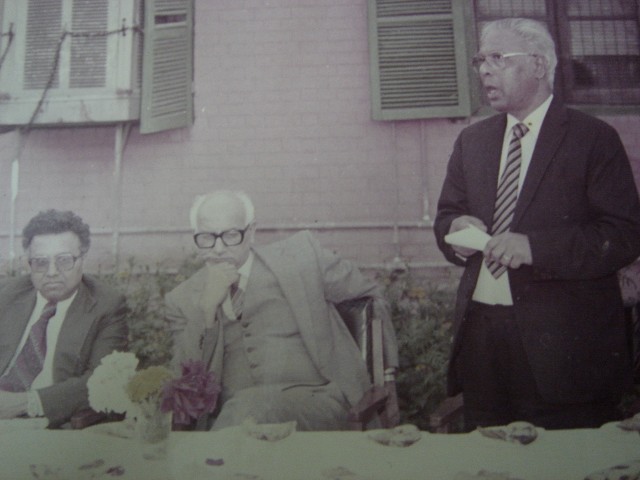
Nowadays, you’re more likely to see people dressing down to occasions, walking around in athleisure, or turning upto work in a T-shirt (I’m guilty of this). In some respects that may be fine in your personal life (I’d argue not), but for example at work, that will undoubtedly alter the way one is perceived and therefore treated.
Why dress well? What does that even mean?
Dressing ‘well’ means putting effort and thought into the way one presents themselves to the world. It depends on the context, your personal taste and reflects certain values.
Turning upto a ‘formal’ event undressed, usually signals a lack of respect, or carelessness or poise. You will form vastly different impressions of the person who comes to a job interview in a T-shirt and jeans versus a three piece tailored suit.
Therefore one core value it reflects is attention. Putting in care into your appearance is the start of how you treat everything else. How you do anything is how you do everything of course. Ackerman writes :
There is a difference between getting dressed and putting on your clothes. The former is deliberate; the latter is not. A person who gets dressed is a person who is intentional. It communicates a plan. During the darkest days of the pandemic, when there was no reason to wear anything but pajamas during quarantine, I made a point of getting dressed each morning. This was something I could control
I remember I had to put on a suit and tie to go to school everyday. I think that subtly altered the way I perceived myself - it made me more disciplined, studious, diligent (previously being the complete opposite).
There’s an umbrella concept of ’enclothed cognition’ 2- the way the wearers psychological processes are altered by their clothing. You will act differently and think differently based on the model you’ve created of yourself. So outfitting yourself in a way that reflects your artistic sensibilities or character, likely reinforces that self-model of being that kind of person.
More importantly, it reciprocally reinforces the way we see ourselves. Our sense of self is deeply influenced by what ‘others think of us’ (or more accurately what we think others think of us)- ‘Looking glass theory of self’ 3 . So you can imagine if you are treated a certain way, you act a certain way, and therefore are treated a certain way etc. A worldview forms around this. Clothing plays an important part in how one is perceived.
Why dress well in your personal life?
Well it goes back to attention. There is no divide in your life -personal space, behaviours of mind, aesthetics, I’d argue is not separate from character formation. This goes to even the smallest things. Do you crumple up your clothes and throw them into your cupboard?
Marie Kondo of all people realises this, through bringing back a modern day ‘animism’ - things are alive. The way you treat anything, is how you treat everything. Dressing ourselves is something we’ve been doing throughout human history - there is almost something sacred about the ritual when done intentionally. It can signal ‘I’m entering the day with purpose’ - a way of honouring the transition from sleep to waking, private to engaged.
Moreover modern life constantly asks : what’s this for? The productivity gurus are constantly asking What’s the ROI? How can this help me get ahead in my job/career? (Another post I want to address a deep narcissism in our culture) Tech culture has valorised ’not caring’ about appearance as being a sign of focusing on what really matters (user metrics, time on site, how much AI slop can we churn out - fantastic metrics…).
But instead, this is taking the opposite approach. It says that ’this matters intrinsically’ - Beauty, care and attention - they’re not a means to an end, they’re how we inhabit life with dignity, poise and grace. I love Nabeel Qureshi talking about “care being the opposite of (AI) slop”.
In formal Zen practice, putting on robes (kesa) is itself a practice. The act of dressing embodying the teaching - reminding us - pay attention! It’s all right here in this moment. So dressing, like any activity we do daily, can be seen as sacred. It can become a ritual, another activity to bring care and attention to.
Why do men specifically dress badly or carelessly?
Ackerman in his essay talks about seeing a couple on a date, the woman clearly had put in effort into her appearance, but the guy had done the bare minimum. I’ve seen the same dynamic so many times - the lady has taken the time to dress elegantly, whereas the guy has thrown on gym shorts, a T shirt and trainers. I suspect this is worse in the US, than in Europe.
A few conjectures (I don’t hold them too strongly, just a few theories).
I : A lack of identity. We know men in general are struggling nowadays, falling behind educationally in comparison to women. There’s been reports of a drop in partying, drinking, sex and relationships for 20-30 year old men, replaced instead with gaming, online gambling and porn.
Psychologically men tend to form their identity through what they do, what they can provide. We see this clearly in defined roles such as in the military. Losing that is devastating. Mislaid ambition and testosterone directed instead towards fictional goals, facsimiles of the real thing. Advancing in video games, instead of acting in the world and advancing in mastery/career/skill, indulging in online porn instead of going out into the real world and dating. This is a big step from clothing, but I think a symptom of this disease. When you know who you are, you tend to dress like it.
II: Lack of role models. Currently, when we look to our leaders, we see people who lack poise. I imagine a leader to be like Jean Luc Picard from TNG - dignified, firm, graceful. Not perfect, but clear in his values. Instead, we see leaders engaging in online meme battles, cryptocurrency frauds and lacking any semblance of grace. On the far end, you have people like Andrew Tate, giving young men a completely distorted view of women. This hurts both genders.
III : Extended adolescence. The markers of adulthood (marriage, career, home ownership) have been pushed later and later - and so the aesthetic of adolescence (sneakers, hoodies, casual) extends too.
IV: Putting effort into appearance has been coded as ‘inauthentic’, ‘vain’ or ‘feminine’. Caring about your appearance signals a certain shallowness. But I’d argue that is backward - not caring about your appearance often signals a general sloppiness that bleeds into everything else.
TLDR : Put some effort into the way you dress!
https://www.youtube.com/watch?v=hZ1OgQL9_Cw : A youtube video of a ’trip through New York in 1911’ ↩︎
https://en.wikipedia.org/wiki/Enclothed_cognition - doubtful of the replicability of the studies, but just using common sense human wisdom and lived experience- it seems obvious that our self perception is altered by the way we present ourselves to the world. ↩︎