on maintenance
Dynamic systems require maintenance.
- You can clean your apartment once, but you need to upkeep it regularly.
- You can fix your bicycle, but you need to ensure the parts are well oiled and the tyres are inflated.
- You can keep a ‘personal knowledge system’ (think Obsidian, Notion, Notebooks - whatever the nerds like to use), but you need to put in new information, get rid of dead information/links and keep it alive.
- You can be in a relationship, but you still need to keep a balance between novelty, excitement, eros – and stability, dependability and trust. You still need to a maintain an effort, go on dates, see them anew.
- You can sit in meditation, ‘see through the ego/illusion of the self’, but it requires constant practice and diligence to let the implications permeate through, and change your behaviours.
- You can master an instrument as a child, but if you stop playing, then your skills atrophy.
- You can make friends, but if you don’t make an effort to reach out and organise activities (especially true for guys who bond shoulder-shoulder), catch-ups and phone calls, those relationships degrade.
- You can pass all of your medical exams with flying colours, but if you don’t make an effort to keep on studying, going back to fundamentals and reading, you stop being an expert.
These are all like gardens. You don’t ‘finish’ a garden - they need constant tending, care and attention. They need ‘maintenance’, otherwise like everything, eventually the thing breaks and the system collapses. All dynamic systems, our body, our buildings/cities, our relationships, our expertise, our collective knowledge, our communication tools, our homes, all require maintenance.
The dishes must be washed, the carpets hoovered, the ‘catchups’ and dates scheduled, the reading done etc. This can be mundane, but its essential.
What stops us from doing it?
One reason may be identity. Suppose you do all of your medical exams - ‘I’m now a consultant doctor in X’. You can take that to mean you are an expert. If you have some level of competence too, people might praise you and call you smart. That means you think you need to stop putting in effort, and you take your foot of the gas. You stop doing the small things needed to maintain that corpus of knowledge (the reading) and you close your mind. The dynamic garden, once alive and flourishing, slowly starts to die.
Another reason is just misunderstanding entropy - we expect things to stay at the same level we left them, perhaps it’s a cognitive bias. You clean your apartment once, and then are surprised that 3 days later, it’s messy again. We forget that the default state isn’t stability- it’s actually decay.
Another is a lack of feedback. You may get busier with work, and skip regular catchups with friends. You may miss the gym/working out for a few days, you forget to pump your tyres - the bike still rides. But the system degrades invisibly and gradually - until one day it can fail catastrophically. By the time you may notice, the maintenance debt can be enormous and overwhelming.
How do we remedy this? How can we pay more attention to maintenance?
One is to recognise that maintenance is really part of the process. As Stuart Brand writes in his new book about maintenance 1
Let “maintenance” mean the whole grand process of keeping a thing going. From that perspective, occasional repair is part of the process. Close monitoring is part of the process. Changing the oil is part of the process. Eventually replacing the thing is part of the process.
Maintenance in this larger sense has nothing optional about it. The necessity of maintenance doesn’t accumulate invisibly, it is understood as a given. When you take responsibility for something, you enter into a contract to take care of it. If it’s a child, to keep it fed. If it’s a knife, to keep it sharp.
I love the idea of maintenance being ’entering into a contract to take care of it’. Attention, care, love - all the same things. This is what Marie Kondo actually preaches, you recognise the things you value and therefore want to actually maintain, take care of. Discard the rest. It’s a compass for what gardens one must water.
Another way of seeing the importance of maintenance is to take your identity out of things you no longer do. When you stop regularly practicing the violin and haven’t touched it for years, despite once being an expert, can you still call yourself a violinist? (I think not).
Another is to ritualise the mundane and make it sacred in small ways. The repetitive nature of maintenance can actually be a gift - washing the same dishes, playing the same scales, reviewing fundamentals, you can find a deep pleasure in it. This sounds trite, until you slow down enough to actually notice - the warm water on your hands, the quiet intimacy of a phone call, the going in and out of the breath. It reminds me of a Zen saying : ‘Before enlightenment, chop wood, carry water. After enlightenment, chop wood, carry water.’
You can build maintenance into the rhythm of life, rather than over-scheduling it. Just make it structural - ’the dishes get done right after dinner’. The ‘weekly coffee/dinner with the sister happens on Saturday morning’. Regular strength training happens after work on Wed, Friday, and Sunday. Reading happens before bed. It becomes part of the texture of the day, of a week, rather than an ‘item on a to-do list. Maintenance becomes part of living.
Gardens are never finished. But that’s not a burden - it’s what makes them alive. The maintenance is the thing itself. To tend a garden, to water a friendship, to sharpen a knife- this is what it means to care. And care, sustained over time, is just another word for love.
https://books.worksinprogress.co/book/maintenance-of-everything/addenda/page/introduction - I can’t wait to read this properly when it comes out - currently you can read it on Works in Progress ↩︎
10 days in to writing - reflections
A few reflections after trying to write something every day.
1. Writing anything good or worthwhile takes a long (ass) time
Henrik Karlsson on Substack writes it takes him between ‘10 and 200’ hours to write an essay. A typical Astral Codex Ten post takes 10-30 hours. Murakami writes 4-6 hours every morning, and still only produces 1 short chapter a day. Countless other examples, where writing demands time where they are often re-writing, re-framing, or scrapping it entirely.
This is not including the time it takes to research, to think, to live those experiences (which arguably is the entirety of your life and becoming.)
People literally have full time 30-40+ hour jobs, just writing on Substack.
It’s nice to know that when you read something good, it’s taken a long time to write. The writers clearly have spent days, months sometimes, meticulously re-writing and refining those sentences. (Which in the digital age, you can just scroll past since no one reads anymore).
So for this small little personal blog, I can lower my standards (Henrik Karlsson’s post on having a ‘shit blog’ is fantastic). I usually get <30 minutes to bash out something, although for longer posts, I have been thinking about the topic for a while.
But any act of inching towards having an ongoing writing practice is worth it for me. You get to think on the page, form opinions and worldviews. It’s like learning anything really, you’ve got to put in the quantity. For an amateur, it’s ok to lower your standards for writing, and use it mainly as a personal vehicle for expression.
2. It’s made me pay much more attention
I’ll admit I’m an infovore. I consume podcasts like its nothing. I suspect everyone is doing this though; we live in a broadcast culture, constantly being fed information.
It would be great if the mind worked like the matrix, you would just download the information and be on your way. But that is not how learning works. One has to actively engage and wrestle with the material - write about it, have a conversation, make something with the knowledge.
Having to write everyday does give me an output tap for the vast amount of information coming in. Admittedly, it is like a tsunami on the input, and a glass of water on the output. But it’s better than nothing.
Half the time I try to sit down and write about it, I can summarise it in a few sentences (Not worth posting) but as I write those sentences, I realise that you can go really deep into this topic. You can just keep on going in fact.
But since time is limited, I take whatever ideas I can get ,see if I can apply them to my life, or bring them up in conversation, and be on my merry way.
3. I’ve been reading more
Trying to do something yourself, just makes you appreciate it more when someone does do it well.
Before attempting to learn the drums, I would listen to the drums on a song, and say that sounded good. But after learning for a couple of months, I now appreciate the level of craft that goes into it.
So in writing, I’m inspired to read the good stuff. So I read more! I don’t know if that makes sense, but I’m glad I’m finally reading.
Saying all of that, my time is up, and I’ve got to go to work! If I had more time, I would have written something more concise, more insightful, and engaging, but sadly I do not.
tending
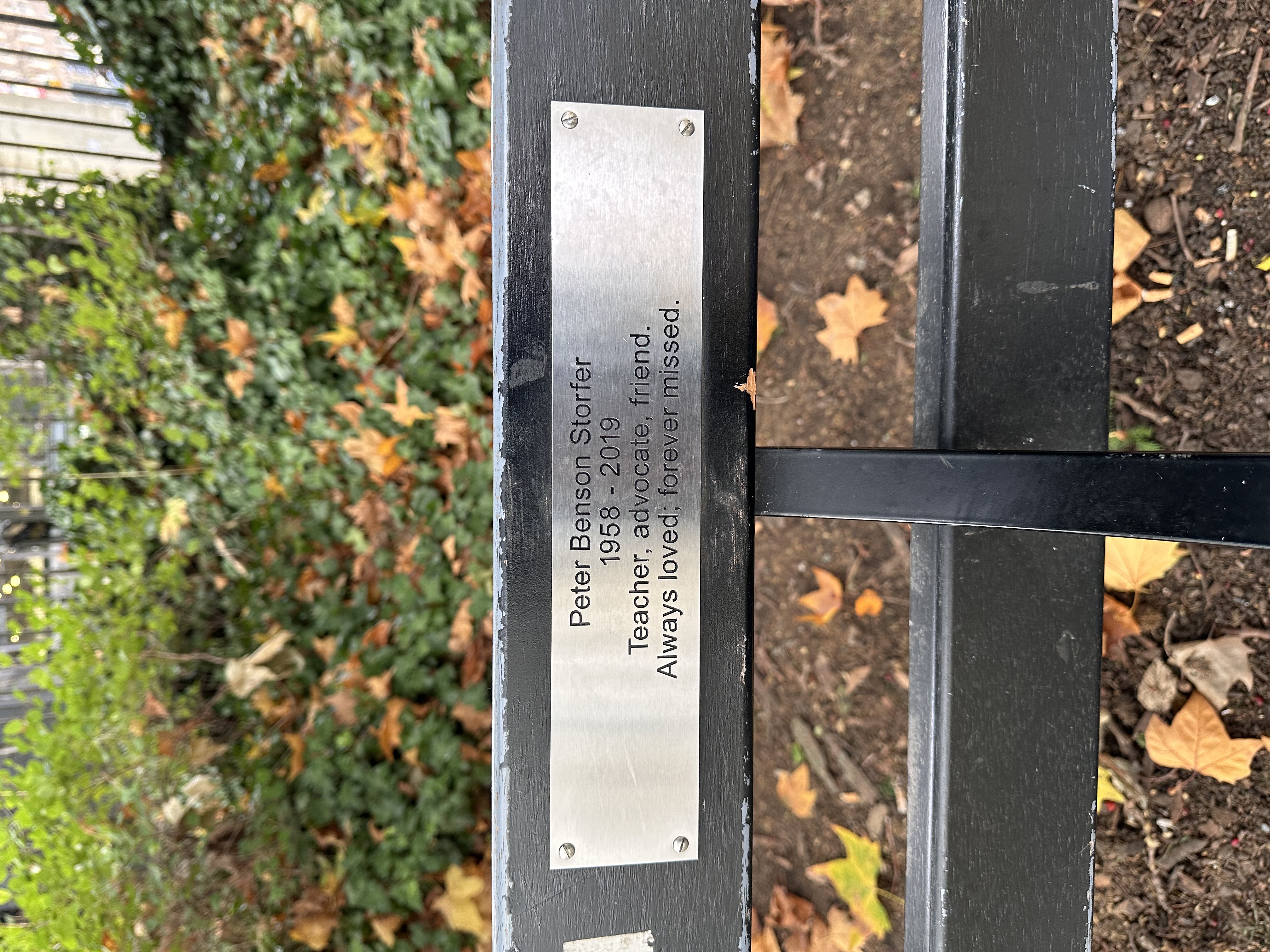
On a park bench stamped with love; watching. Man plays catch with his dog. Mother rolls a stroller with baby. Friends gossip over warm coffee. A man rakes the leaves.
Mothers take care of sisters, Who take care of children, Who take care of puppies, Who take care of aged men.
We’re all just tending I think.
To the world. To each other.