title: how to learn - revised date: 2022-02-05 draft: true
Conceptual information can be thought of as a forest. There is a vast ocean of concepts that we overlay onto ‘reality’ that we believe has predictive power. What we ‘can’ know is more than anyone person can understand. So we create heuristics, shortcuts, mental models of reality. This a small ‘forest’ within the larger (almost infinite) forest.
The point is : There is a lot of ‘stuff’.
Modern day work emphasises conceptual knowledge. Especially in STEM fields, your work requires mostly conceptual understanding.
How do we encode these concepts. How do we learn?
title: kindness, gratitude and love date: 2021-10-18
I’ve met some incredibly compassionate and kind people in life. It’s almost hypnotic. They radiate an aura of ‘contentedness’ - although that may just be my projection.
When I was 20, I spoke to a lady once who had literally been doing ‘metta’ meditation for 40 years + regularly, with several retreats. I think that exposed me to the idea, that
- This is trainable
- There are people out there who make this a goal in life.
I wanted to remind myself that these ‘values’ really should be one of your highest priorities. Moreover many traditions (Buddhism, Stoicism, Taoism and many other religious traditions) say that these are trainable skills.
You can train yourself to think in certain ways, and therefore act in certain ways. It becomes deeply ingrained into your character.
It’s not a matter of reading, or pretending you’re moral, it’s a matter of training your intention and action.
Kindness
At the end of a life, you will look back at how you have lived. If you can pick one metric, let it be kindness. How have you locally impacted your neighbourhood, your environment, yourself?
You can train your habitual thought patterns and speech and ultimately action will follow from this.
The Buddhists have the concept of ‘Right Speech’. They recognise the power of words in shaping cognition. Thoughts become words, which become actions, which becomes character and fate.
I don’t identify as Buddhist, but I find value in many of the frameworks. Right speech is :
- No lying
- No divisive speech
- No abusive speech
- No idle chatter
It’s an ideal to aspire to rather than a directive, (I love idle chatter). But the first three - be watchful. The way you speak influences the way you act.
It’s strange, because until you closely observe the mind, you realise that all speech is actually thought. The thought arises first, then you speak it. A huge component of right speech therefore is paying close attention to your thoughts, accepting them, and then choosing not to indulge them. ‘Invite Mara for tea’ and then let it go.
By being attentive to this, you shape your habitual thought patterns. In a way, you train yourself to think ‘kind’ and that flows into ‘acting’ kind. They are both inseparable.
This is the basis of ‘metta : loving kindness. You train the mind to form certain habitual patterns over patterns of anger, jealously, hatred, comparison etc. You train the mind to suffer less.
Paradoxically, you may start off with the intention ‘I should be kind’, but that slowly morphs into the ‘self’ coming out of it. There simply is action without self rumination. You do and let go. Give and let go.
Part of this is also viscerally seeing the suffering in oneself : the loneliness, the comparison and jealously, the striving to be better than others. These states and intentions are unpleasant, and it is only when you sit and closely look at them, that you realise this.
You realise that suffering is prevalent, and you do your best to minimise this in yourself and others. Through actions, words, intention. This is what matters at the end of a life. How have the chains of cause and effect one left behind helped others?
Gratitude
If you can’t be happy with what you already have, anything that you are wanting will not make you happy.
Gratitude is simply kindness directed towards yourself in many ways. It’s about choosing a certain framing for the story you are constantly telling yourself.
One example : you might choose the story of seeing the glass half empty or half full. Another alternative story – is that you might be astounded that you even have this glass, and that it is see through and can hold this liquid etc. Then the stoics, go a step beyond and suggest that you imagine losing it. Therefore when you have it, you appreciate it more. When you inevitably lose it, you are able to let go. These are all ‘ways of framing events’ such that ’lack’ is not a component.
Gratitude makes living in your own body/mind much more peaceful.
Compassion
This is simply kindness directed towards others. You ‘wish them well’.
This is different from ’empathy’ where you ‘feel what the other person is feeling’. This is ‘human’. But empathy has a dark side- as Paul Bloom writes about in ‘Against Empathy’.
Empathy is selective. You tend to empathise with your in-group. Moreover it leads to to make rash decisions based on ‘strong’ feeling. In healthcare workers, it can lead to burnout. If empathising with a depressed person, you don’t want to put yourself in their shoes.
Instead you want compassion. You ‘aim to wish them well’. This is a better approach.
title: mold the world towards graceful ends date: 2022-03-20
If you want a golden rule that will fit everybody, this is it: Have nothing in your houses that you do not know to be useful or believe to be beautiful.
William Morris
I’ve been Kondo-pilled since I heard about the petite Japanese lady a few years ago. Mistakenly, many people misunderstand Kondo’s message. It’s not about getting rid for the sake of getting rid of things, but only keeping what brings joy.
The objective of this post is to remind you to seek joy in the small things. The often overlooked trivialities in your life. To pay a specific kind of attention to them: introspective awareness of the sensations of using it, and a keen appreciation that they are impermanent and will vanish.
This is what the Buddhists mean when they talk about ‘non-attachment’. It’s about deeply experiencing the contents of consciousness, without grasping for more or pushing away the unpleasant, but being totally immersed in each moment.
This sounds dramatic to apply to objects, but its a form of gratitude practice. It becomes automatic after a certain point. You own objects. Use them, value them, and when the time comes, let them go.
Own few things
Don’t get attached
Use them, value them, be grateful and when the time comes- let them go.
Leave the earth with nothing
Give away everything you own to your family, your friends and society
Leave quietly
What do you value? Here is a small list from me.
- Biophilic design
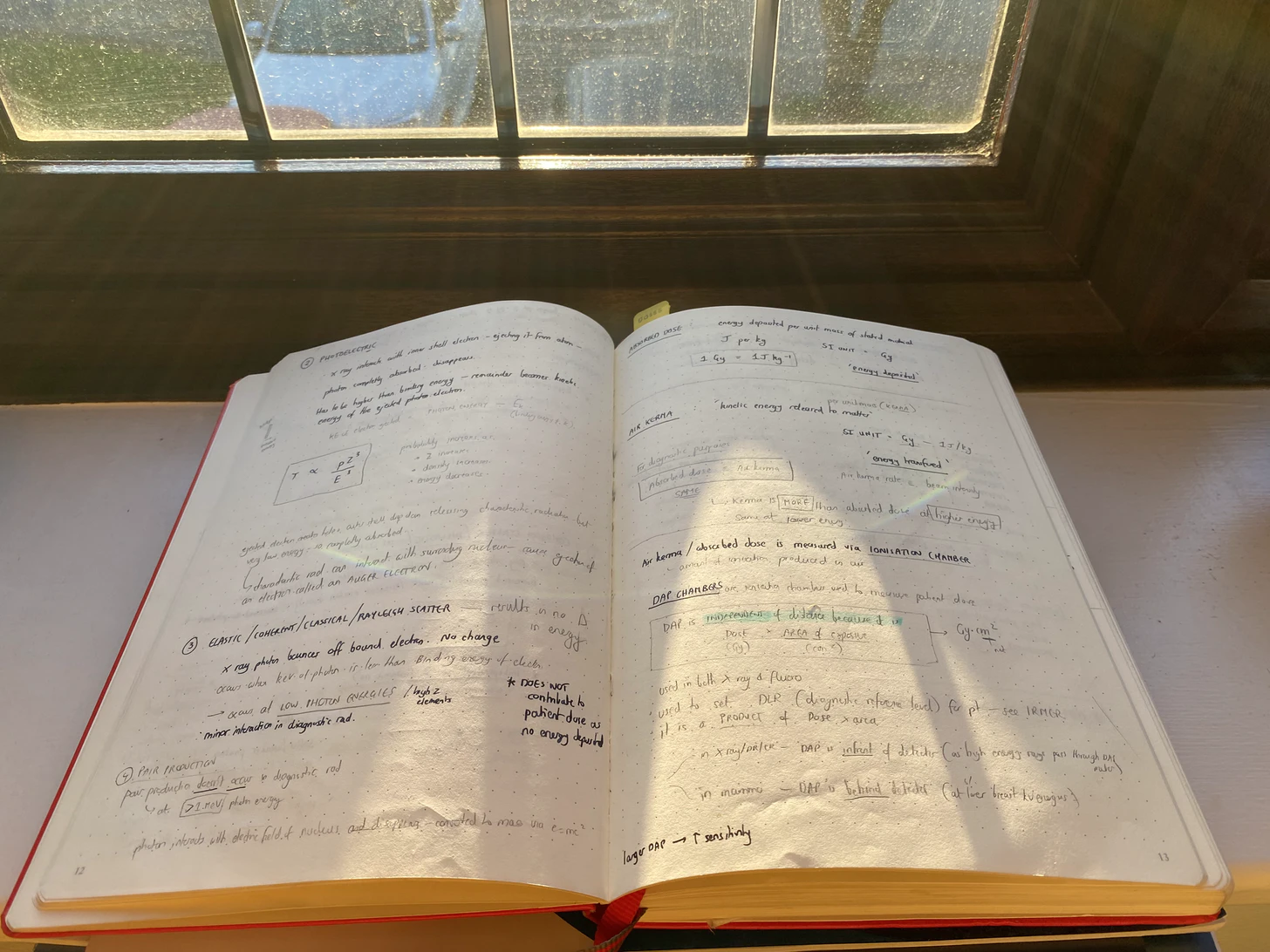
- Paper notebooks
- Fountain pens
- Worn books
- Coffee mugs
- Typing on a mechanical keyboards
- Wood and glass
Your physical environment often ends up being a manifestation of your internal environment.
A change I’ve noticed is a keener appreciation for art and beauty in life. It’s definitely a ‘peak’ in conscious experience that I want to consistently come back to.
I’ll leave with this directive. Look deliberately for beauty, especially in the mundane. Pay close attention. As Alain de Botton says, seek to ‘mold the world to graceful ends’.