design is iterative
This essay explores an idea already written about by Henrik Karlsson’s Everything that turned out well in my life followed the same design process.
In fact, go read that instead of this, because he has said everything I’m going to say, with 1000x more tact and elegance.
It’s actually one of the most important realisations I’ve had, and one that I’ve learned through experience, but I feel compelled to write about it so I can deeply internalise it.
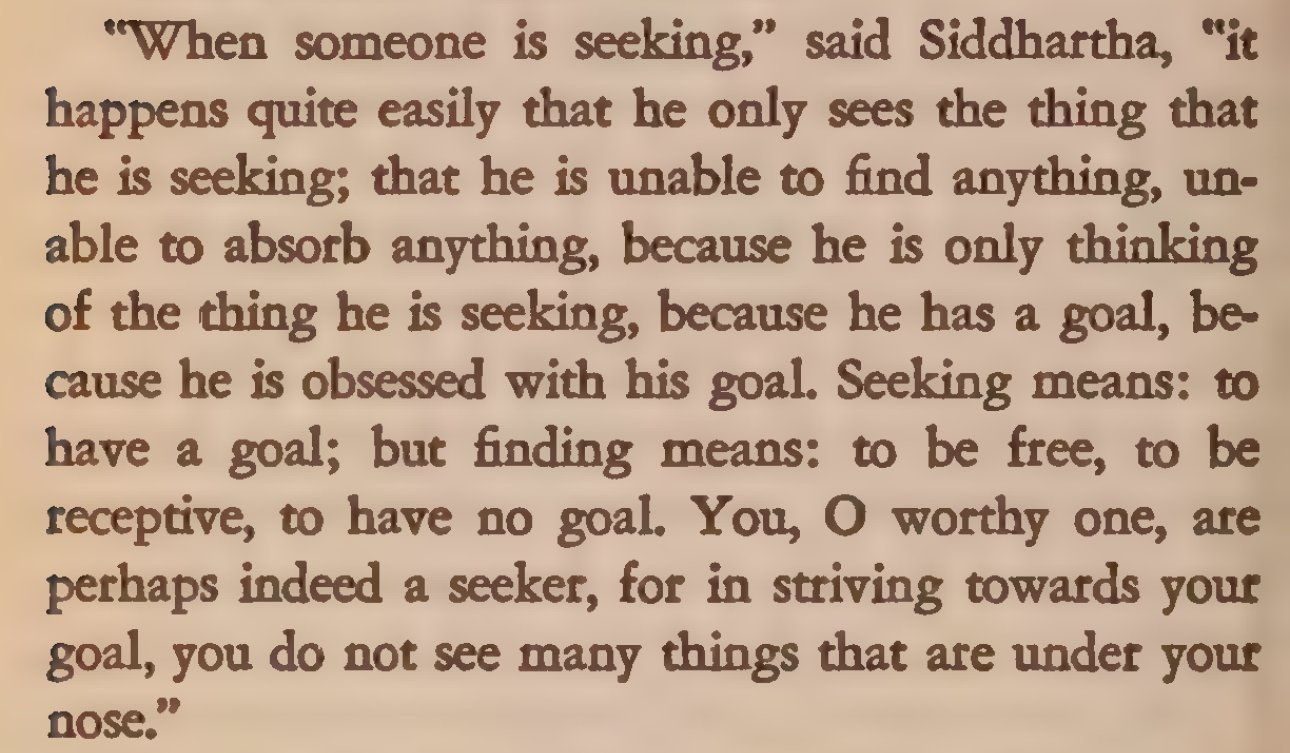
Good design is iterative, bottom up ‘unfolding’
What you can plan is too small for you to live. What you can live wholeheartedly will make plans enough for the vitality hidden in your sleep David Whyte
There are two approaches to design.
Top-down design starts with a complete vision of the endpoint. You imagine the finished state: the perfect career, the ideal relationship, the complete product, and then work backwards to create a plan to get there. It’s architectural: blueprint first, then build to spec. The assumption is that you can know what you want before you’ve experienced it, and that the world will remain stable enough for your plan to stay relevant.
Bottom-up design starts with curiosity and immediate experience. Instead of a grand vision, you begin with small experiments, paying attention to what genuinely engages you. Each step reveals information that shapes the next step. It’s biological: like a plant growing toward light, constantly adjusting based on real feedback. The path emerges from the walking.
The fundamental difference isn’t just about planning versus improvisation. It’s about where knowledge comes from. Top-down assumes you can know through thinking; bottom-up insists you can only know through living. Top-down treats life like a problem to be solved; bottom-up treats it like a mystery to be explored.
A few differences I’ve observed.
Abstract vs Embodied
- Top-down: Relies on abstract, secondhand information—“what I think being a lawyer is like.” Assumes you can know through thinking. It suffers from the planning fallacy: underestimating complexity, overestimating control. - see Adam Mastrionni’s essay : Face it, you’re a crazy person
- Bottom-up: Generates embodied knowledge through direct experience. Hidden constraints and opportunities reveal themselves only through practice. You can only know through living. It is fuelled by curiosity and genuine interest. Each experiment is intrinsically interesting, not just instrumentally useful.
Security vs Insecurity
- Top-down: Fuelled by the search for security—which is really the fear of insecurity. You have this vision you’re committed to. “I have to be a doctor/lawyer.”, “I have to achieve X”, “I have to be married by a certain age” etc.
- Bottom-up: Leans into the inherent insecurity of reality. “I don’t know what I want but I will adapt through trial and error”. Whatever life that forms around that is one that ‘fits you’. The glove moulds itself to the hand.
Failure vs error correction
- Top-down: Failures feel catastrophic. You’ve invested so much in the vision that any deviation threatens your identity.
- Bottom-up: Failures are data points. The whole point is to preserve methods of error correction. You’re meant to try and fail—each failure shapes the design.
Coercion vs joy
- Top-down: It can falls prey to the “once I get there” fallacy. You’re forcing yourself through tasks, like jamming a square peg into a round hole. The process feels like something to endure rather than enjoy.
- Bottom-up: Allows for joy and engagement in the process itself. Each step reveals something new. The journey becomes as important as any destination. See the ‘Fun Criterion’.
Fragile vs anti-fragile
- Top-down: Feels secure. You have a clear vision and plan. But this security is an illusion. The design is fragile because it hasn’t been tested in reality.
- Bottom-up: Feels insecure initially—the option space is wider, the path unclear. But through constant trialing and error-correcting, you build something anti-fragile.
Narrative arc vs messy unfolding
- Top-down: Creates a neat narrative structure. “I’m becoming a doctor.” It’s the traditional career ladder where you can cleanly explain your trajectory.
- Bottom-up: Can be messier but more authentic. “I studied philosophy, explored meditation for a decade, became fascinated with neuroscience, and now run a media company.” (This is Sam Harris). The funny thing is we always retrospectively create narratives anyways to justify how it happened. Just notice when you are creating a narrative before even doing the thing!
Here are some quick examples in various domains of top down vs bottom up design.
Examples
Startups: Pivot-based success stories (Twitter, Instagram) vs. rigid business plans
Cities: Planned cities like Brasília vs. organically grown cities like Tokyo
Learning: Following a rigid curriculum vs. project-based/curiosity-driven learning
Writing: Outlining everything vs. discovering what you think through writing
Exercise: Following a rigid 12-week program vs. exploring different activities until you find what you genuinely enjoy and stick with
Reading: Working through a “100 books you must read” list vs. following your curiosity from book to book, creating organic knowledge chains
Hobbies: Deciding to “become a painter” and buying all the equipment vs. doodling → sketching → gradually acquiring tools as needed
Scientific research: Grant proposals with predetermined outcomes vs. following unexpected results (like penicillin’s accidental discovery). Actually a big problem of science (see David Deutsch talking about this : https://youtu.be/6nN-L3DO0-o?si=J5VdGZ2jsp2iW0wG&t=852) ’this grant application always includes a statement of what you are going to discover… and that is fatal to research. Because genuine research…is incompatible with knowing what you are going to discover. Discovery is an open ended problem solving process. The first problem you are going to address is… just the beginning.’
Career: deciding you want to be ‘X’. The trap is that you don’t actually know what ‘X’ does all day, you just have an idea of what ‘X’ does. See Adam Mastroianni - Face it, you’re a crazy person
Dating : having a long checklist of traits or an ideal version of your perfect partner, vs meeting someone and letting romance unfold.
Product design: Feature-complete launch vs. MVP and iteration based on user feedback
Friendship: Connecting with an agenda (how is this person useful to me) vs. genuine connections that deepen naturally
Community building: Creating elaborate structures/rules vs. letting culture emerge from member interactions
Language learning: memorising grammar rules vs. immersion and conversation
Cooking: Following recipes exactly vs. tasting and adjusting as you go
Gardening: Designing the perfect garden layout vs. planting things and seeing what thrives in your specific conditions
Economic systems: Central planning vs. market emergence
Fashion trends: Designer-dictated seasons vs. street style bubbling up
TLDR : Follow your genuine curiosity in everything that you do. Trial and error - tiny experiments. Pay attention to the context. Allow the glove to fit your hand, rather than forcing yourself to conform to a certain shape.
how to not develop good taste

Distract yourself. In fact immerse yourself in so much media that you never have to pay attention to the world or your thoughts about it. Sat in a coffee shop? Make sure you stare at your phone. Never make eye contact with the barista or ask about her day. People watching? Why would you do that?
Follow what the crowd is doing. TikTok and instagram are your friend. Force yourself to enjoy the trends to stay up to date. Don’t question it. The more people are following it, the better it has to be.
Make sure to suffocate your genuine intellectual curiosity. Why do you care about ‘18th century french literature, or the migratory pattern of swallows? What value is it going to add to your life? Make sure you crush any intrinsic curiosity to delve into those - its not helping you in your career or life mate.
On that point, make sure to optimise your life. You are the most important thing. Dial in your nutrition and sleep. Your body is a temple. Minimise any excess time, and make sure to always be doing. Hustle.
ABC : Always be connected. You need to be in the know. Monitor the situation.
Make sure to live entirely in your mind. The body is just a vessel to be sculpted.
Make sure to always have your AirPods in- listening to podcasts/news/music on 2x speed. The smartest people are the ones who know the most.
Make sure to plan every detail in advance. Leave little room for trial and error, serendipity. Top down approaches (‘a vision’) are always better than a bottom up unfolding.
Ask LLM’s their opinion on everything. It’s not sycophancy, its just evidence you’re doing the right thing
Seek social cohesion. Dishonest peace is much better than honest conflict. Put on different faces around different people.
Make sure to have any opinion on everything. Not sure? Ask the LLM
Consume more than you create.
When you do decide to put something out into the world, make sure to tailor everything to the audience. It’s about them at the end of the day. Grip tightly on the outcome of everything you make.
Addition > subtraction
Never re-read books or re-visit art. Always be on the lookout for the new thing.
Never sit with discomfort or boredom. The moment you feel even slightly unstimulated, reach for your phone. Those brief moments of emptiness between activities? Dangerous territory for actual thoughts to emerge.
You can get to the end of the feed if you scroll hard enough.
Outsource all your aesthetic decisions. Interior design? Copy Pinterest boards wholesale. Personal style? Whatever the algorithm serves you. Why develop your own sense of what you find beautiful?
Speed through museums. Take photos of every piece but never actually look at them. The goal is documentation, not experience.
Treat silence as your enemy. Fill every moment with noise - podcasts while showering, audiobooks while walking, background TV while eating. Raw sensory experience is inefficient.
Never cook without a recipe. Tasting and adjusting? That’s for people with too much time. Follow instructions to the letter and move on.
Avoid anything that can’t be immediately understood or monetised. If you can’t explain its ROI in under 30 seconds, it’s not worth pursuing.
Replace intuition with data. Don’t trust your gut - there’s surely a study, poll, or review aggregate that can tell you what to think instead.
Make sure your hobbies are resume-worthy. Pottery because you enjoy the feeling of clay? No. Pottery because it shows you’re “creative” and “well-rounded.” (Make sure to add it to your linkedin!)
Never admit you don’t understand something. Nod knowingly at contemporary art, pretend you get the wine notes, agree that yes, you definitely hear the difference with those £500 headphones.
Cultivate opinions based on their social currency rather than genuine interest. Know just enough about trending topics to participate in conversations, but never enough to actually care.
Never leave a conversation without something actionable. Every interaction should yield a book recommendation, productivity hack, or networking opportunity. Human connection for its own sake is inefficient.
Quantify everything. Rate your experiences out of 10. Track your moods in an app. If you can’t measure it, did it really happen?
Never buy anything without reading at least 47 reviews. Your own instincts about what you might enjoy are far less reliable than aggregated stranger opinions.
Minimise time between point A → B. Wandering is for people who lack direction. Time is money
Never trust your first reaction to anything. Google what you’re supposed to think first. Your authentic response is probably wrong.
Always be preparing for the next thing. At breakfast, plan lunch. During your vacation, research the next one. The present is just a launching pad for the future.
Remember: spontaneity is just poor planning in disguise. That random urge to take a different route home, to stop and examine something that caught your eye? Suppress it. Efficiency is everything.
Most importantly, never trust yourself. Your instincts, your preferences, your odd little fascinations - these are all just bugs in your programming waiting to be optimised away. The path to good taste runs through everyone else’s brain but your own.
And finally, if you ever catch yourself genuinely enjoying something - something weird, something useless, something you can’t explain or justify or monetise - immediately stop. You’re clearly doing it wrong. Good taste is serious business, and there’s no room for joy in the optimisation of the self.
Remember: The best taste is no taste at all - just a perfectly calibrated response system that mirrors back what everyone else has already approved. Now if you’ll excuse me, I need to check what everyone else thought of this post before I decide if I like it.
environments as a prompts
Belief in the significance of architecture is premised on the notion that we are, for better or for worse, different people in different places, and on the conviction that is architecture’s task to render vivid to us who we might ideally be. Alain de Botton
I recently brought back my favourite books from my family home to my new flat; books that have deeply influenced me over the past decade. Some I deeply enjoyed for the prose, others drastically altered my world view and some left me sobbing uncontrollably, knocking me out emotionally for weeks. All of them have copious marginalia scribbled on the worn dog-eared pages, letters from my past self to my current self; a snapshot of thought in time.
I never considered myself sentimental about objects or attached to possesions, but I’m realising maybe I am. Like Marie Kondo, the modern day animist preacher reminds us , objects hold memories and valence; when we touch them they may bring us ‘joy’ or stories.
When I glance at Siddhartha by Hermann Hesse, I’m brought back to the 19 year old self that found something beyond words in those pages. Or at Pico Iyer’s books, reminding myself that home is a place we carry with us rather than a fixed destination. Or recently, David Deutsch’s The Beginning of Infinity and the necessity of optimism. I’m whisked back to the plane/train/bus journeys where I became absorbed and lost in those words, those worlds, where time lost all its power and the self was nowhere to be seen.
Those are the stories, the memes, the ideas that have shaped the lens through which I see the world. The authors who I’ve had silent conversations with, sometimes lasting years and now decades. The same themes emerge ; how to live in a world of impermanence, how to love, how to let go.
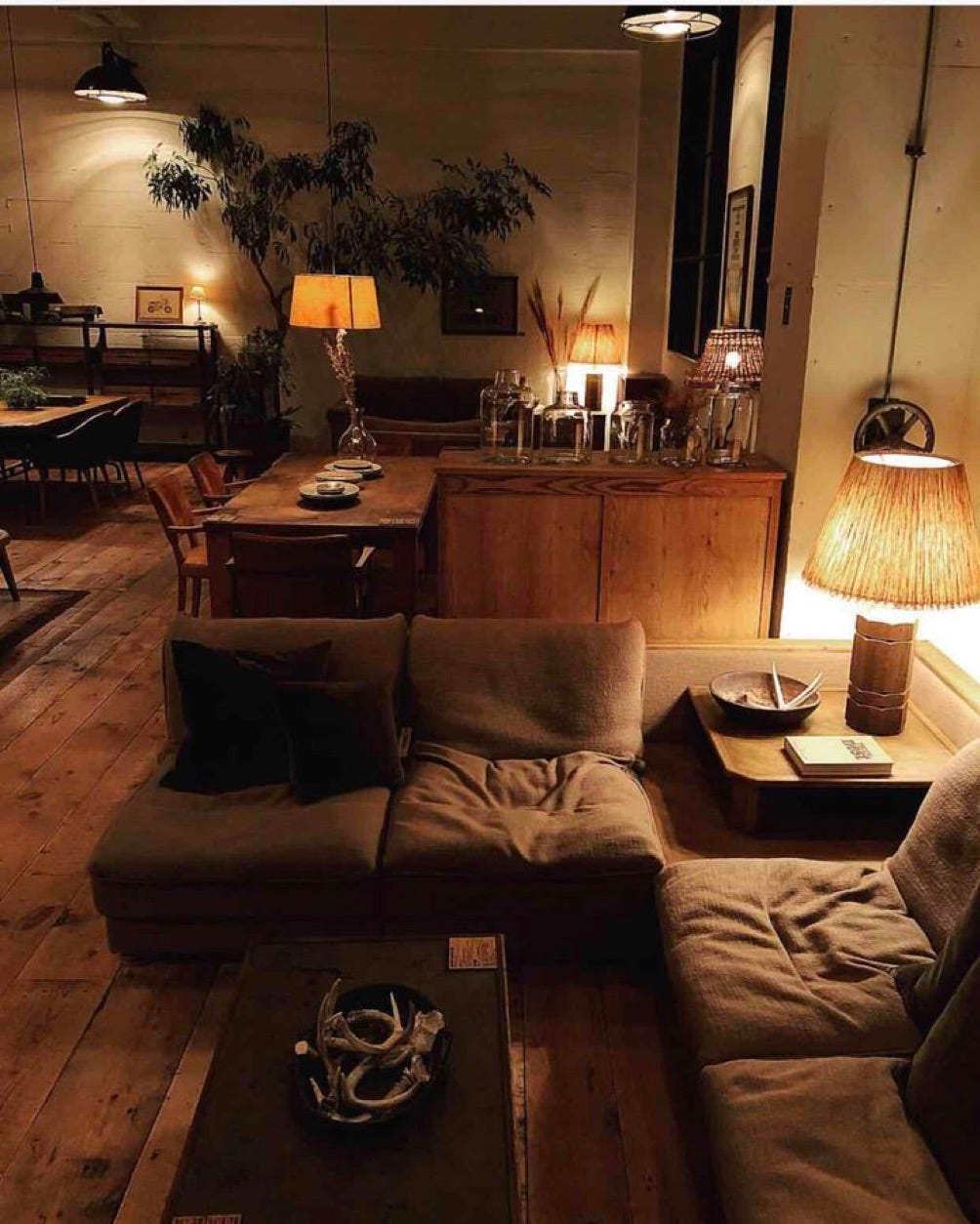
All of this made me think about how your environment and architecture shapes you. We know that when you walk into a relaxed cozy living room, you can feel a sense of ease, or you walk into a cavernous ornate Gothic cathedral and are left in awe. Colour, light, plants, music layer dimensionalities onto space ; music being how we decorate time.
They all act as prompts for behaviour. As Churchill observed: “We shape our buildings; thereafter they shape us.” In leaving books scattered around my flat, I find myself picking them up in the evenings, lost within those words once more. By having plants in my space, one outcome is that they brighten the room, but the other is that they turn me into the kind of person who gives time and attention to small things. They make me more attentive.
One gripe I have with reading on kindles is that you don’t get this tactile physical reminder. It’s all lost in the digital ether, intangible and weightless. It’s one of the reasons, I think there has been a reversion back to analogue physical technologies. We want to hold the art that moved us. We want to be reminded how a couple of sentences in a song tore a hole through our psyche and left us irrevocably changed, or how a book shaped who we are today. It’s why I buy all of my favourite books as a physical copy even even if I read them digitally first.
All of this is a roundabout way of saying the obvious : your environment shapes and prompts you, what kind of routines and habits you inhabit, what kind of thoughts, moods and outlooks you cultivate. So a reminder to myself to give a little more attention to this.
This is probably part 1 of a series of thoughts I’ve been having on design. Next: how design is a bottom-up iterative process—an unfolding, rather than a top-down final destination you arrive at.