On Instrumentalism
Last week, I climbed Mount Snowdon in Wales, a 5 hour leisurely journey up the Pyg track and down the Miner’s track. Every year 600,000 people make their way up the slopes and summit the mountain; the busiest peak in Wales.
After reaching the summit, I came across a fantastic consequence of popularity of the hike, there was a queue to take a picture at the summit. Not a small queue either, probably a 20-30 minute wait time.
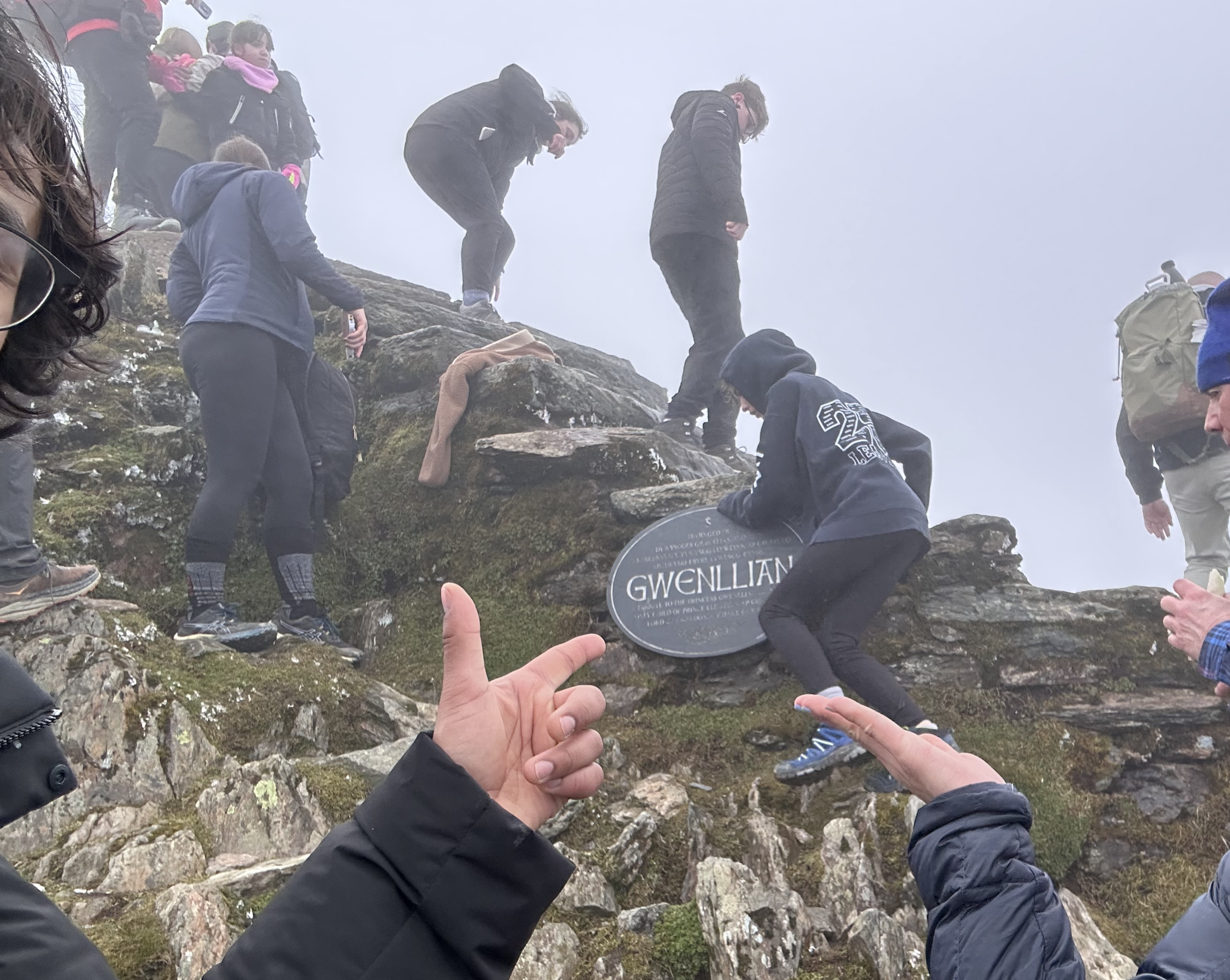
I was happy to snap a picture with the sign and climb back down.
On the way down, I kept thinking about the concept of instrumentalism; the idea of treating things as mere tools for achieving some further end, like health, productivity or personal wellbeing. For example, ‘hitting your 10,000 steps, or going for a walk in nature because it will lower your blood pressure’, or climbing Snowdon to grab a picture at the top.
There is nothing inherently wrong with instrumentalism, but it struck me at how it’s slowly weaselled its way into every corner of modern existence. Every activity we do has some justification as to how it’s good for you.
Meditate so you can perform better (the entire Headspace/Calm pitch). Reading challenges (52 books a year challenge!). Food reduced to macronutrients. The instagrammification of travel. Gratitude journalling to rewire your brain.
Julian Baggini in this wonderful essay tackles the instrumentalisation of everything. The essay is titled the six second hug, a slight at Gretchen Rubin’s The Happiness Project book, where she hugs her husband for at least six seconds because her research told her that’s the minimum time to promote oxytocin and serotonin release.
Seemingly, we’ve entered a period where virtually everything good in life, art, nature, friendship, learning, keeping a diary, laughing, is reframed as not being valuable in itself, but as a tool for achieving something else.
Now instrumental activities have their place in the world. We obviously do many things to get to some end. We have to turn up at our job to feed ourselves and house our children.
What’s wrong with all your activities being instrumental; to achieve some end?
Firstly, it hollows out the activity itself. The motivation behind why you are doing something matters, and it changes how you experience it. Two people can inhabit entirely different internal worlds based on their motivational structure for doing something. For example, if you’re hugging someone to release oxytocin, rather than if you love them, it looks the same from the outside, but one of those is infinitely thinner than the other.
Moreover, the journey matters not the destination (trite as the sentiment is). The end isn’t itself intrinsically valuable, because once you reach it (if you can really reach it), then what? Health is not valuable in itself, but as a foundation to allow you to do meaningful things. Wealth only matters for what it affords you, not an ever larger number to aspire to. Friendship is valuable for its own sake, not because it ‘releases endorphins in your brain’.
Treating activities as instrumental can also drain them of any potential benefits that they actually do have. Suppose you read that loneliness is bad, and that it worsens your health outcomes. Scared, you suddenly reach out and fill your social calendar. Maybe this is helpful. But the value of friendship is that it takes you out of your own self concern and into care for others, but if you’re only socialising because the research scared you, you’re still centred on yourself. How much ‘value’ are you really going to get - it’s cargo culting friendship. The internal motivational structures matter.
Furthermore, instrumentalism traps one in the future. Everything you do is justified by some downstream pay off. Baggini in his essay writes that “life isn’t preparation for the future, its a game that’s already started and time is running out”. You don’t ‘get’ to the end and complete the video game. It’s a river that’s always in motion.
Seeing the world through the instrumentalist lens becomes a habit over time and the consequence is a dearth of meaning. You end up with a chain of ‘instruments’ pointing at other instruments with nothing of genuine value at the terminus. The consequence is some sort of existential nihilism or ‘meaning crisis’ as John Vervaeke puts it.
What’s the alternative?
In asking that question, I fear that I fall into the trap once more.
In asking what the alternative to instrumentalisation is, I’m subtly asking ‘what does the non-instrumental approach get me?’. The answer is nothing, and that is the point. Things that are intrinsically valuable don’t need any justifications, you do them because you are internally drawn to do them. You want to do them.
A commenter on Baggini’s essay put one of my favourite quotes by Victor Frankl related to this.
“For success, like happiness, cannot be pursued; it must ensue, and it only does so as the unintended side-effect of one’s personal dedication to a cause greater than oneself or as the by-product of one’s surrender to a person other than oneself. Happiness must happen, and the same holds for success: you have to let it happen by not caring about it.” Victor Frankl
Surrender is the right word.
Thought is not the way through. It’s instead immersion into the flow of life. The quietening of the self and ego, rather than reinforcing. It is the moment that I was not engaged in thought on the way up Snowdon, where I felt there was ’nothing to do’ that I felt alive. No peak to reach. No external metric to optimise. That is, until my thoughts pulled me back to the instrumental worldview.
Perhaps it is difficult to escape, especially for those of us inclined to optimise everything, but having outlets where there is ’nothing to do, nowhere to go’ puts it all into perspective.